
Although such alerts are not compulsory for the banks, this may become the norm now if payments are missed even for a day.
'In case of shortage of other raw material, like filters and bags, one can try to develop another vendor. However, for chemicals as critical as adjuvants, this is not possible'
This will be an upfront payment for the vaccine doses that these two companies will supply to the government.

'The US has invoked the Defence Act and banned export of raw materials.' 'This is as good as banning vaccines.'

The production of Covaxin will increase from the current 10 million doses per month to 60 million-70 million by July-August.

It has taken 51 days to reach a daily caseload of 84,000 from 11,000, as against 85 days taken in the first wave, report Abhishek Waghmare and Sohini Das.

'I don't think anybody would want to be in my position today where every head of State has to be explained that I am prioritising my country because there is a surge in cases.'
Both manufacturers have sought funds in excess of Rs 150 crore under the department of biotechnology's Mission Covid Suraksha scheme. Announced last November, the scheme has an outlay of Rs 900 crore to help develop Covid vaccines, from the clinical development stage to setting up production sites.

For development finance institution to succeed now, the government must stand like a rock behind it and be patient.

'No approval was given to Sputnik V on Thursday. Some queries have been asked on safety, efficacy, and logistics, which the firm will have answers to at the next meeting'
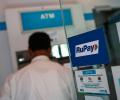
RuPay is working on how to increase offers to customers. It is also focused on technology innovation in the card payment system.
'We expect to get the approval in the next few weeks,' says Deepak Sapra, CEO, API and pharmaceutical services, Dr Reddy's Laboratories (DRL).
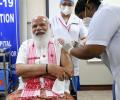
'He came back from the US only to work for his country.' 'He has invested his fortunes to build this company and is married to his work.' 'Rarely does one see such commitment.'

The ministry of corporate affairs (MCA) has launched a probe into the books of Edelweiss Asset Reconstruction Company (EARC) following allegations by a whistleblower of fund diversion and irregularities. The whistleblower, Paras Kuhad, a former additional solicitor general of India, had written to the Prime Minister's Office and the Reserve Bank of India (RBI). Kuhad has alleged that Edelweiss Group and Caisse de depot et placement du Qubec (CDPQ), a Canadian institutional investor, which hold stakes in the ARC, diverted funds and did not adhere to norms while making investments in EARC's instruments. Sources have indicated that a probe has been initiated, but the MCA did not comment on the issue.

Indian corporate are fast tapping the international bonds market to raise funds for their operational expenses even as they reduce their presence in the rupee bond market. As bonds are costlier for companies and investors are more sceptical than the banks, chief financial officers say they are looking at other avenues for raising funds in the coming months as dollar bond rates are lower in the range of 100 to 250 basis points. "For corporate with reasonable credit quality, the Indian bond market has become less of an option from a cost point of view. "In addition, conditions imposed in the Indian bond market by investors post Franklin episode have also become very onerous," said Prabal Banerjee, president-finance of Bajaj group. "Hence very few corporate are looking at the local bond market for resource mobilisation, since both, bank loans and the overseas bond markets are much more attractive," he said.
The bank will now be in a position to resume normal lending activity, including corporate lending, with tightened risk management framework.
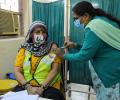
Anybody over 50 years of age or with co-morbidities can get a date, place and time of choice for getting the vaccine shots.

The combined deposits of its Indian operations stood at SGD 9 billion and net advances were at SGD 5.6 billion at the end of December 2020.
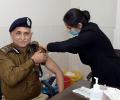
Two weeks after the vaccination programme started, about 37 per cent of the targeted 10 million healthcare professionals had received the first shot. This slow rate may prompt the government to allow vaccines in the private market sooner, to use up the doses before they expire, Sohini Das reports.
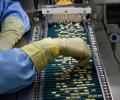
Once a difficult market to crack, in recent years, China has relatively opened up its drug market, enacting reforms and speeding up approval time.
 © 2026 Rediff.com - Investor Information - Advertise with us - Disclaimer - Privacy Policy - Sitemap - Feedback - About us - Terms of use - Grievances